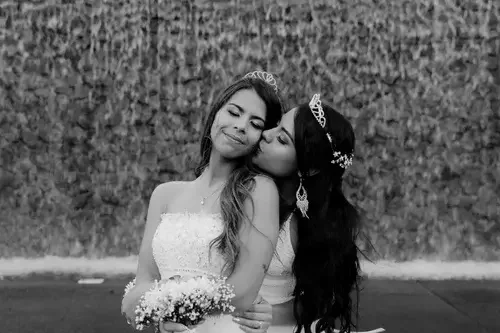
Since the Supreme Court's landmark decisions in United States v. Windsor (2013) and Obergefell v. Hodges (2015), same-sex couples have had the same legal right to sponsor a spouse for a marriage-based green card as any other married couple. The legal pathway is identical. The eligibility requirements are identical. But the evidence challenge is not always identical.
Same-sex couples often face unique documentation hurdles that have nothing to do with the authenticity of their relationship and everything to do with the realities of how their relationships developed. Many couples kept their relationship private from family members for years. Some come from countries where same-sex relationships were illegal, criminalized, or socially impossible to document openly. Others have been together for a long time but never had access to the financial and legal tools—joint accounts, shared leases, marriage certificates—that heterosexual couples have used to document their lives together.
USCIS evaluates all marriage-based green card cases on the same legal standard: is this a bona fide marriage? But for same-sex couples, building that evidentiary record requires thinking creatively, strategically, and with an understanding of the specific documentation challenges that arise in these cases.
This guide explains exactly what USCIS looks for, what same-sex couples can do when traditional evidence is limited, and how we approach these cases at Khunkhun Law.
What "Bona Fide Marriage" Actually Means
USCIS is not evaluating how romantic your relationship is, how long you dated before getting married, or whether your families approve. They are evaluating one thing: is this a genuine marriage entered into in good faith, or was it entered into primarily to obtain immigration benefits?
To make that determination, USCIS looks at evidence that the couple has actually built a life together, shared finances, shared residence, shared decision-making, involvement in each other's families and social networks, and the kind of day-to-day connection that characterizes a real marriage.
The specific types of evidence USCIS typically expects to see include:
Joint financial accounts — bank accounts, investment accounts, or credit cards with both names
Joint lease or mortgage — showing you live or have lived together
Insurance documentation — being listed as a beneficiary or dependent on each other's health, life, or auto insurance
Utility bills and other shared expenses — showing the same address
Joint tax returns — if you have filed together
Birth certificates of children, if applicable
Photos — together at significant events, with family, over time
Communication records — texts, emails, messages showing the ongoing nature of the relationship
Affidavits from people who know you — friends, family members, coworkers who can attest to the relationship
For heterosexual couples who have been together for years with fully merged finances and openly integrated lives, many of these items are easy to produce. For same-sex couples, the picture is often more complicated, and USCIS needs to understand why.
The Documentation Challenges Unique to Same-Sex Couples
When the Relationship Was Private
Many same-sex couples kept their relationship private for significant periods of time—sometimes for years, sometimes for the entire period before marriage. This might be because family members were not accepting, because one or both partners were not out, because of religious or cultural pressures, or simply because it was a personal choice.
The result: a relationship that may have been deeply committed and long-lasting but that left almost no external documentary footprint. No photos on social media. No joint family holiday celebrations. No shared announcements. No accounts of the relationship from friends and family who knew about it at the time. This does not mean the relationship was fake. It means the evidence needs to be built differently.
When the Relationship Developed in a Country Where It Had to Be Hidden
For couples who met or spent significant time together abroad—particularly in countries where same-sex relationships are criminalized, stigmatized, or simply not acknowledged—the documentary record from that period can be nearly nonexistent.
A couple who met in a country where being openly gay could result in arrest, violence, or social destruction understandably did not take public photos, did not introduce each other to family, did not list each other on insurance policies. The absence of traditional documentation from that period is not a red flag—it is a reality that must be explained clearly and compassionately in the application.
When Marriage Was Not Legally Available Until Recently
Some long-term same-sex couples did not have access to legal marriage until relatively recently. They may have been together for a decade or more but had no legal framework in which to formalize their relationship. They may have had commitment ceremonies, domestic partnerships, or civil unions, but not the legal marriage that now forms the basis of the green card petition.
For these couples, the evidence of the relationship's authenticity exists—but it may not look like what USCIS typically expects to see from a recently married couple. The years together before legal marriage are part of the story, and they need to be documented and presented as such.
Building Your Case When Traditional Evidence Is Limited
When standard documentation is limited, there are several approaches that work effectively.
Detailed Personal Statements
A well-written personal statement from each spouse—telling the story of the relationship in their own words—is powerful evidence. These statements should cover:
How and where you met
The progression of the relationship
Why certain evidence (photos, family gatherings, public records) may be limited
What your relationship actually looked like during the periods that are less documented
Your plans for your shared future
USCIS adjudicators are humans. When a statement honestly explains the circumstances of a relationship, including why documentation is scarce, it often resonates more than a stack of bank statements for a couple who have only been together for a short time. We help our clients write these statements, and we help them understand what level of detail is appropriate and persuasive.
Third-Party Affidavits
Friends, family members, coworkers, religious leaders, neighbors, and others who have knowledge of your relationship can submit sworn affidavits on your behalf. These affidavits should describe:
How they know you
When they became aware of your relationship
Specific experiences, events, or interactions that they witnessed
Their personal knowledge of the genuineness of your marriage
Note that these witnesses do not need to have known about the relationship from its very beginning. A friend who learned about the relationship more recently but who now has close personal knowledge of the couple is still a valuable witness. The question is the quality of their knowledge, not the length of time they have known.
For couples whose relationship was private, affidavits from people who did know about the relationship—even if the circle was small—are extremely valuable. If family members who initially did not know about the relationship have since been told and have accepted it, their current affidavits are also meaningful.
Communication Records
In the modern era, some of the most convincing bona fide marriage evidence exists on people's phones and in their email inboxes. Text message threads, WhatsApp conversations, email chains, video call logs, and social media messages between partners can demonstrate an ongoing, emotionally intimate, daily relationship in a way that is very hard to fabricate.
If your relationship was private externally, it was almost certainly not private in your private communications. This is documentation that many couples have in abundance and do not think to gather until an attorney prompts them.
Documentation of Shared Life That Is Not Legally Formalized
Not all evidence of a shared life shows up on official documents. Consider what actually exists in your daily life together:
Photos taken privately, even if not shared publicly—from trips, everyday moments, significant events
Travel records showing you were in the same places at the same times
Evidence that you have met each other's family or friends, even in private settings
Records of shared purchases, shared subscriptions, shared routines
Records of attending events together—concerts, religious services, cultural events
Evidence of caring for each other during illness or difficulty
Evidence of involvement in decisions that matter to each other—medical, professional, financial
The goal is to paint a complete picture of a life actually shared. Formal documents like joint bank accounts are helpful but not required if the overall picture is credible.
The USCIS Interview: What Same-Sex Couples Should Expect and How to Prepare
Not every marriage-based green card case goes to an interview—many are adjudicated on the documentary record alone. But interviews are common, and for same-sex couples, they sometimes come with additional questions about the nature of the relationship and how it developed.
At the interview, USCIS officers will ask questions of both spouses—sometimes together, sometimes separately. They are evaluating consistency: do both partners tell the same story about how they met, when they got together, significant moments in their relationship, and their current daily life?
Preparation matters. At Khunkhun Law, we conduct mock interviews with our clients before their scheduled interview. We walk through the kinds of questions that are asked, we help both partners articulate their story naturally and consistently, and we make sure no question catches them off guard.
A few things same-sex couples should be particularly prepared for:
Questions about how the relationship developed in private. If your relationship was not publicly known for a period, you should both be able to explain why, consistently and naturally. Prepare for this with your attorney.
Questions about family knowledge and acceptance. The officer may ask about each partner's family and whether they know about and accept the relationship. Be honest and consistent. Many families have gone through a period of learning and adjustment—this is not unusual and is not a red flag.
Questions about cultural or religious context. For couples from cultural or religious backgrounds where same-sex relationships were particularly sensitive, being able to articulate this context clearly is helpful.
Do not over-prepare to the point of sounding rehearsed. The goal is to speak naturally about a relationship that is real. We help clients find the balance between being organized and being authentic.
What About Couples from Countries Where Same-Sex Relationships Were Criminalized?
For couples who met or lived in countries where same-sex relationships are illegal—or where being openly gay would have endangered them—the documentation challenge is compounded by the reality that openly engaging in the relationship at all would have been dangerous.
USCIS adjudicators are trained to understand international contexts, and experienced immigration attorneys know how to present these cases accurately and effectively. Explaining the legal and social environment of your home country as part of your application narrative is not an admission of wrongdoing—it is essential context that explains why your relationship looks the way it does on paper.
If either partner faced or faces legal risk based on their sexual orientation in their home country or any country where you have lived, this context should be part of your case file. It may also be relevant to other aspects of your immigration case in ways an attorney can evaluate with you directly.
Working With Khunkhun Law Marriage & Family Immigration on Your LGBTQ+ Marriage-Based Green Card Case
At Khunkhun Law Marriage & Family Immigration, we have helped many same-sex couples and LGBTQ+ individuals successfully navigate the marriage-based green card process, including cases with limited traditional documentation, international context, and families who were not initially supportive of the relationship.
We understand that the documentation challenge these cases present requires more than just gathering paperwork—it requires telling a story clearly, compassionately, and persuasively in a way that reflects the real relationship. We take the time to understand your specific situation and build a case that speaks for itself. USCIS applies a nondiscrimination policy in the adjudication of same-sex marriage-based petitions, and we know how to present your case within that framework effectively.
Frequently Asked Questions
Do same-sex couples face different eligibility requirements for a marriage-based green card?
No. Since Obergefell v. Hodges (2015), same-sex married couples have identical legal rights to sponsor a spouse for a marriage-based green card as heterosexual couples. The eligibility requirements, forms, and legal standards are exactly the same. What may differ is how the evidence of a bona fide marriage is assembled and presented.
What if our relationship was private and we don't have photos or joint accounts from the early years?
This is a documentation challenge, not a legal barrier. The solution is to provide what evidence you do have—private photos and communications, witness affidavits from people who knew about the relationship, detailed personal statements explaining the circumstances—combined with current evidence of your shared life together. An attorney can help you build the strongest possible case from what is available.
Our families did not know we were in a relationship for several years. Do we have to explain this?
You should be prepared to address it, especially if you are asked at an interview. A clear, honest explanation of why the relationship was private—whether for family, cultural, religious, or safety reasons—is much better than trying to avoid the topic. USCIS officers are trained to evaluate the full context of a relationship, and families learning about same-sex relationships over time is not unusual or disqualifying.
We met in a country where same-sex relationships are criminalized. Will that hurt our case?
Not inherently. The international context is an important part of explaining the documentary record from that period. Experienced immigration attorneys know how to present this context appropriately so USCIS understands why traditional documentation from that time may be limited or nonexistent.
What do witness affidavits need to say to be helpful?
Affidavits from friends, family members, or others who know you should include how they know you, when they became aware of your relationship, and specific interactions or events they witnessed that speak to the genuineness of the marriage. Quality and specificity matter more than quantity.
Can we use text messages and WhatsApp chats as evidence?
Yes, and they can be very effective. Private communications between partners that show an ongoing, intimate relationship over time are strong evidence of a bona fide marriage. Compile and organize them with your attorney's guidance on what to include.
Will USCIS treat our case differently because we are a same-sex couple?
USCIS applies a nondiscrimination policy in adjudicating same-sex marriage-based petitions, and both spouses' roles and relationships are evaluated equally. The legal standard—a bona fide marriage entered in good faith—is the same. Working with an attorney who understands the specific documentation considerations for same-sex couples ensures your case is presented as strongly as possible.
Do we need to go to an interview?
After you file the adjustment of status, USCIS will review your file and schedule an interview when they determine the case is ready for adjudication; you will receive an official notice by mail (and sometimes electronically) that states the date, time, location, and any documents or evidence you must bring.
Are you in a same-sex marriage and preparing to apply for a marriage-based green card?
We would love to help you understand your specific evidence situation and what your case needs to be strong. Call us, email us, or review other options to get in touch with us for an immigration consultation. We have represented many clients with successful results, even with the most difficult set of facts.
DISCLAIMER: Sharon Khunkhun is an immigration attorney and the founder of Khunkhun Law Marriage & Family Immigration in New York City. Her firm focuses exclusively on marriage and family-based immigration, including spousal green cards, fiancé visas, removal of conditions, and naturalization for LGBTQ+ and all couples. This blog is for informational purposes only and does not constitute legal advice. Every case is different—please schedule a consultation for guidance specific to your situation.